advertisement

Pages

Showing posts with label Japan. Show all posts

Friday, May 27, 2011

A Fukushima Mother's Letter

Steven L. Herman, Voice of America (VOA) Bureau Chief/Correspondent in Seoul, relayed this message. I could not help, but repost it:

When Tomoko-san, a mother of two in Fukushima City, heard from an NGO worker that I was going to be in Fukushima to report on a story about radiation levels at local schools, she was kind enough to volunteer her time to speak to me – and handed me this letter. I promised to translate it and share it with you. So here it is:

“To people in the United States and around the world,


I am so sorry for the uranium and plutonium that Japan has released into the environment. The fallout from Fukushima has already circled the world many times, reaching Hawaii, Alaska, and even New York.


We live 60 kilometers (37 miles) from the plant and our homes have been contaminated beyond levels seen at Chernobyl. The cesium-137 they are finding in the soil will be here for 30 years. But the government will not help us. They tell us to stay put. They tell our kids to put on masks and hats and keep going to school.


This summer, our children won’t be able to go swimming. They won’t be able to play outside. They can’t eat Fukushima’s delicious peaches. They can’t even eat the rice that the Fukushima farmers are making. They can’t go visit Fukushima’s beautiful rivers, mountains and lakes. This makes me sad. This fills me with so much regret.


Instead, our children will spend the summer in their classrooms, with no air conditioning, sweating as they try to concentrate on their lessons. We don’t even know how much radiation they’ve already been exposed to.


I was eight years old when the Fukushima Daiichi plant opened. If I had understood what they were building, I would have fought against it. I didn’t realize that it contained dangers that would threaten my children, my children’s children and their children.


I am grateful for all the aid all the world has sent us. Now, what we ask is for you to speak out against the Japanese government. Pressure them into taking action. Tell them to make protecting children their top priority.


Thank you so much,


Tomoko Hatsuzawa
Fukushima City
May 25, 2011”

Addenda
  • No love lost: Anguished Fukushima citizens face off with government representatives at a town hall meeting held Jul. 19, 2011, to discuss the consequences of the Daiichi reactor accidents. The government of Japan promised differently in its report with the title "Report of Japanese Government to the IAEA Ministerial Conference on Nuclear Safety - The Accident at TEPCO’s Fukushima Nuclear Power Stations -" to the International Atomic Energy Agency dated June, 2011. The following claim is excerpted from the report's chapter X (www.kantei.go.jp): “In order to allay health concerns of the residents, screening and decontamination of the residents will definitely be implemented. A health counseling hotline was opened and on-site health counseling, and mental care is provided to ensure that residents’ health is properly managed.” (07/26/11).
A badge expressing parents' concern (08/25/11).
Related Posts

Video Message from Katsutaka Idogawa, Mayor of Futaba Town. from Atsushi Funahashi on Vimeo.
This is a Video Message of Katsutaka Idogawa, Mayor of Futaba Town, Fukushima. It was meant towards German/International audience at Berlin International Film Festival 2012, where NUCLEAR NATION, a documentary of Futaba refugees, was premiered in February.


You can read its text here;

http://nuclearnation.jp/en/?p=135

Saturday, May 21, 2011

The Enigma of 1 Fukushima 4 号機


Reactor № 4 of the Fukushima Daiichi Nuclear Power Station on the northeast coast of Japan roughly 150 miles north of Tokyo was shut down for service past November, and according to most sources, e.g. this Areva report with the title "The Fukushima Daiichi Incident"dated Mar. 27, 2011, the fuel was moved into the spent fuel pool (SPF) adjacent to the reactor vessel on the service floor of the reactor building.


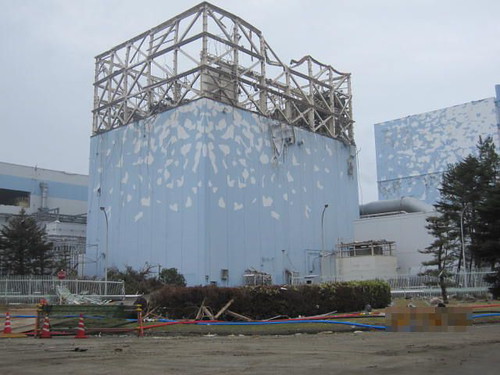
The strong earthquake and more than 10-foot high tsunami on the afternoon of Mar. 11 disrupted water cooling to the SFP. In the aftermath, according to the first TEPCO press release on the issue with the title "Damage to the Unit 4 Nuclear Reactor Building at Fukushima Dai-ichi Nuclear Power Station" dated Mar. 15 a loud explosion destroyed the superstructure of the reactor building on that day. Hydrogen produced by radiolysis or the burn of fuel rod cladding were suspected causes. However, video footage taken with an underwater camera submersed in the SFP of reactor № 4 released by TEPCO on May 8, 2011, showed no major damage to the rod assemblies stored in the pool.

Fuel rod assemblies stored in spent fuel pool of reactor #4 (courtesy TEPCO).

Hypothetically, the hydrogen might have found its way from adjacent reactor № 3, which had exploded violently on Mar. 14 [TEPCO press release with the title "White smoke around the Fukushima Daiichi Nuclear Power Station Unit 3" dated Mar. 14, 2011]. However, the exact path the gas possibly could have taken has not been established yet. Radioactive fission products have been found at elevated concentrations in the pool water since the first sampling after the quake on Apr. 13 [TEPCO press release with the title "Results of analysis of spent fuel pool water of Fukushima Daiichi Nuclear Power Plant Unit 4 (2nd continued report)" dated May 9, 2011], and radiation dose levels at the inland side of the reactor building were measured at 100 milliSv/h (TEPCO press release with the title "Plant Status of Fukushima Daiichi Nuclear Power Station" as of 2:00 PM" dated Mar. 23). People spending 10 hours at that location would suffer from acute radiation syndrome.

Intriguingly, thermographs taken by Japanese Self-Defense Forces helicopter overflights consistently show a higher temperature over the reactor well than over the SFP. The example below was recorded on Mar. 24.

Thermograph of the surface of  the building of reactor № 4 taken from JSDF helicopter. The seaside is at the bottom. The reactor well co-localizes with the red spot, whereas the spent fuel pool is situated under the green area to the left (courtesy JSDF).
The degrees shown on the thermograph do not represent the actual temperatures in the pool accurately. According to this update with the title "Fukushima nuclear power plant update: get all the data" published online by The Guardian on May 20, the pool water temperature must have been roughly 70 °C at the time. Over time, SFP temperatures at reactor № 4 have been fluctuating excessively, while cooling water has been continuously added. Despite the constant replenishment, temperatures rose rapidly two weeks ago, reaching 80 °C on May 9, according to IAEA updates of 12 - 18 May entitled "Fukushima Nuclear Accident Update Log". Reactor water temperatures are not reported.

Taken together, the above observations suggest that nuclear fission has been proceeding at low levels in the building of reactor № 4. However, it is not yet established how and where precisely this fission occurs, and what constituted the source of the hydrogen accumulation leading to the March 15 explosion.

This TEPCO document with the title "Start of regular inspection Fukushima Daiichi Nuclear Power Station Unit 4" dated Nov. 30, 2010, details the work to be accomplished in reactor № 4 until Sep. 24, 2011. It mentions only fuel assembly replacement.

Addenda
  • Andrew Gilligan and Robert Mendick report an intriguing observation by a worker at the Fukushima I nuclear power station immediately after the earthquake. According to their post with the title "Japan tsunami: Fukushima Fifty, the first interview" published online by The Telegraph on Mar. 27, 2011, “(a) ghastly boom was heard in the suppression chamber of reactor 4” The suppression chamber is the torus under the reactor pressure vessel, constituting an instrumental part of the primary containment system. It remains difficult to understand why this boom occurred, since reactor № 4 was shutdown (06/05/11).
  • An instructive brief on the efforts of constructing a new closed-loop cooling water system and filtration for the spent fuel pool of reactor № 4 is shown in the video below (06/17/2011):

Related Posts

Tuesday, May 17, 2011

Fukushima: Failure of the Mind


For the third time in the history of the commercial use of nuclear power, operating a reactor during an emergency proved beyond human abilities, leading to a critical chain reaction of nuclear fission and the meltdown of highly radioactive fuel in the reactor core. The accidents at Three Mile Island, 1979, and at Chernobyl, 1986, constitute the precedents.

☢ At 14:46 on Mar. 11, 2011, the Tōhoku-Chihou-Taiheiyou-Oki earthquake struck the east coast of Japan with magnitude 9. The temblor sent the three at the time power-generating units of the Fukushima Daiichi nuclear power complex operated by Tokyo Electric Power Co. into emergency shutdown known with a SCRAM [first Tokyo Electric Power Co. press release with the title "The Effect of Earthquake Occurred in the Northern Part of Japan(as of 4:30 pm today)", dated Mar. 11, 2011].
Excerpt from the scram log of reactor No. 1. The log records the time stamps of the seismic trips and the pursuing actions. Systems to monitor neutron fluxes were activated (RBM - rod block monitoring, APRM - average power range monitor;  RWM - rod worth minimizer). The control rods were inserted. Electric power sources were checked. The water level in the reactor pressure vessel (RPV) fell, likely because the main steam line valves closed as part of the SCRAM, shutting off feedwater and the main steam turbine path. RPV pressure built immediately. Within a minute the Reactor Protection System provided makeup coolant, possibly involving the Isolation Condenser.
☢ At 14:56, NHKWorld reports in a news clip with the title "Nuclear plant cooling system manually shut down" published online May 17, 2011, Tokyo Electric Power Co., or TEPCO for short, “says plant workers may have manually shut down the cooling system because pressure inside the reactor had dropped sharply from 70 to 45 atmospheres.” According to Mari Saito and Kevin Krolicki's post on Reuters with the title "Fukushima nuclear plant not built to take megaquake" published online on Reuters May 16, 2011, the power company stated “that a worker may have shut down a cooling system known as the isolation condenser shortly after the earthquake when he saw that the No. 1 reactor was losing temperature quicker than the utility's guidelines allowed.”

In accord with the NHKWorld report, documents released by TEPCO suggest that the reactor vessel pressure significantly diminished within roughly 15 minutes after the automatic engagement of the isolation condenser of the emergency core cooling system (ECCS), but returned to pre-quake levels within another 15 minutes (TEPCO press release with the title "Submission of a report regarding the plant parameters of Fukushima Daiichi Nuclear Power Station at the time of the earthquake to Nuclear and Industrial Safety Agency, Ministry of Economy, Trade and Industry", dated May 16, 2011). The pressure curve below documents this quick turn around. The recording stops within five minutes after the tsunami hit.
Excerpted from TEPCO Press Release, May 16, 2011.
The decision to disengage the isolation condenser proved fateful. The earthquake had already disrupted offsite power and disabled one of two emergency diesel generators.

Control room whiteboard with operator notes on Reactor 1 through the first 30 minutes after the seismic SCRAM. The entry at 15:16 mentions the isolation condenser the first time (courtesy TEPCO).
☢ At 15:27, the first 30-foot high tsunami waves hit the facilities on the shore (post by The Yomiuri Shimbun with the title "TEPCO details tsunami damage / Waves that hit Fukushima plant exceeded firm's worst-case projections" published online Apr. 15, 2011).

☢ At 15:29, a radiation monitor about a mile from reactor unit 1 sounded alarm because of high amounts of radiation according to Yuji Okada, Tsuyoshi Inajima and Shunichi Ozasa's post with the title "Fukushima May Have Leaked Radiation Before Tsunami" published online on Bloomberg May 19, 2011.

The above photograph taken May 10, 2011, and added Feb. 27, 2012, shows the pair of steam vent pipes for isolation condenser subsystem A and B, exiting the reactor building of Unit 1 in the middle of the wall immediately under the refueling floor. Note the vent pipe surrounded by debris is clearly open. This is the vent of subsystem A, from which steam was observed emanating in the hours after the quake. Both subsystems were actuated automatically after the SCRAM and shut down by the operator minutes later. Only subsystem A was re-activated before the power outage (courtesy Daisuke Tsuda).
☢ At 15:41, the second emergency diesel generator failed, resulting in the complete loss of alternating current [second TEPCO press release with the title "Press Release (Mar 11,2011) Occurrence of a Specific Incident Stipulated in Article 10, Clause 1 of the Act on Special Measures Concerning Nuclear Emergency Preparedness(Fukushima Daiichi)", dated Mar. 11, 2011]. Photographs for the press TEPCO released on May 19, 2011, show water flooding the area near the vent stack servicing the Radiation Waste Treatment Building at approximately 15:42.

Picture taken from the 4th floor of the Radiation Waste Treatment Facility of the Daiichi Fukushima nuclear power complex showing the north side at approx. 15:42 (TEPCO Archive of May, 2011).
☢ At 16:36 the isolation condenser had boiled dry (BRC memorandum with the subject "Overview of the Accident at the Fukushima-Daiichi Nuclear Complex", dated May 10, 2011), compromising the ECCS [third TEPCO press release with the title "Occurrence of a Specific Incident Stipulated in Article 15, Clause 1 of the Act on Special Measures Concerning Nuclear Emergency Preparedness(Fukushima Daiichi)", dated Mar. 11, 2011]. Paul M. Blanch and David Lochbaum's brief for the Union of Concerned Scientists with the title "BWR Containment Overpressure" published May 3, 2004, details other potential weaknesses in ECCS design that may have contributed to its failure.

The loss of coolant led to a complete meltdown of reactor fuel on that very day (TEPCO press release with the title "Reactor Core Status of Fukushima Daiichi Nuclear Power Station Unit 1", dated May 15, 2011). A hydrogen explosion on the following day resulted in a massive release of airborne radiation.

In the weeks since, TEPCO poured tens of thousands of tons of salt and fresh water into the reactor in an attempt to cool the molten fuel slumped at the bottom. Highly radioactively contaminated water is seeping through cracks, broken seals and shattered pipes (Jiji Press post with the title "Over 100,000 Tons of Polluted Water Seen at Fukushima N-Plant" dated May 18, 2011), possibly escaping  into the open sea. The situation is by far not yet under control.
The oldest are the most vulnerable (schema of Reactor 1, a boiling water reactor). Molten fuel presumably collected at the bottom of the oblong reactor pressure vessel (RPV) at the center. Some may have escaped into the pear-shaped drywell of the primary containment, because indirect evidence suggests that the RPV's bottom has been breached and the containment is damaged according to a NHKWorld News post with the title "No.1 reactor has 4.2 meters of contaminated water" published online May 20, 2011. Moreover, we cannot rule out that molten fuel may have reached the doughnut-shaped suppression chamber of the primary containment seen in cross-section at the very bottom of the drawing.
It is feared that the reactors of Units 2 and 3 underwent similar loss of coolant accidents and reactor core meltdowns. Unit 3 experienced the most violent explosion, destroying the service floor of its building completely.


The reactors are still smoldering. The crisis is far from over. I shall update the time line of the first-day events leading up to the core meltdowns at Fukushima as more details become available. They crassly reveal once more that in times of extraordinary crisis, when nuclear reactors are impacted by events outside the scope of their design basis, the human mind is prone to fail.

RPV Temperature of Fukushima Dai-ichi 1 号機 [°C]
Date and Time of Last Update: JST

Radiation Dose at the Bottom of the Primary Containment of Fukushima Dai-ichi 1 号機 [Sv/h]

1 Sv = 100 rem
At this dose, we develop acute radiation syndrome. We would die within minutes staying at the location of the dose measurement above!

Acknowledgment
I collected most helpful technical information from this exhaustive scribble Live discussion and are indebted to its many contributors with their diverse views and backgrounds.

Addenda
  • This Mainichi Daily News post with the title "No. 1 reactor pressure vessel likely damaged immediately after quake" published online May 26, 2011, reports that “at the reactor, the magnitude 9.0 quake registered an intensity smaller than envisaged under its quake-resistance design.” TEPCO said they suspect, however, that the temblor directly damaged the RPV and/or accessory piping (06/02/2011).
  • The National Geographic Daily News published an informative article by Josie Garthwaite with the title "Would a New Nuclear Plant Fare Better than Fukushima?" online on Mar. 23, 2011, which tells us about recent developments in nuclear reactor design thought to improve the ability of preventing a fuel core meltdown after a LOCA which happened to three reactors after the earthquake and tsunami at Fukushima Daiichi Nuclear Power Station. It remains to be seen whether the passive, gravity-driven emergency cooling systems implemented in the most recent reactor generation actually deliver an enhanced functionality compared to the emergency core cooling system that was supposed to be able to cool the reactors at Fukushima solely on battery power still available on that fateful day (06/03/11).
  • On Sep. 20, 2007, TEPCO released a press announcement with the title "Results of a general study of potential seismic impact on safety-significant equipment in the Fukushima-Daiichi Nuclear Power Station and the Fukushima-Daini Nuclear Power Station in light of the Niigata-Chuetsu-oki Earthquake in 2007". In the appendix to this release with the title "A summary of the “Report on the results of a general study of potential seismic impact on the main facilities of the nuclear power stations made on the basis of the observational data at the Kashiwazaki-Kariwa Nuclear Power Station”" the company published a graph shown below comparing two acceleration vs. frequency seismic spectral curves.
    Comparison of seismic spectra presented in TEPCO press release dated Sep. 20, 2007.
    One curve represents the seismic spectrum recorded at the Kashiwasaki Kariwa Nuclear Power Station during the 2007 earthquake (red). The other represents the design basis spectrum for Fukushima Daiichi Unit 1 (black), apparently intended as reference for the quake spectrum observed at Kashiwasaki Kariwa. Vertical lines indicate what I assume are the resonance frequencies for certain reactor components. The earthquake produced the greatest increases in acceleration above design basis around 0.25 cycles/s, that is near the resonance frequencies for FUEL BUNDLE and SHUTDOWN COOLING SYSTEM PIPE. Roughly equal or higher accelerations were found at 0.40 cycles/s and greater, but no component resonances are provided for this range. The seismic design weaknesses uncovered above may have contributed substantially to the early demise of Unit 1 (06/17/2011).
  • Unit 1 is equipped with two independent isolation condenser subsystems named A and B, only one of which was activated during the shutdown after the quake. According to this excerpt from the Report of the Japanese Government to the IAEA Ministerial Conference on Nuclear Safety dated June, 2011, page IV-39, the operators in the control room were instructed by manual to shut the isolation condenser down, if the temperature in the reactor pressure vessel dropped faster than a prescribed rate:
    “The shutoff of the MSIV increased the RPV pressure, and at 14:52 the IC automatically started up. Next, in accordance with the operating manual for the IC, at 15:03 the IC was manually shut down. The manual notes that the temperature decrease rate for the RPV should be adjusted to not exceed 55 °C/h. Moreover, the reactor pressure varied three times between 15:10 and 15:30, and TEPCO performed manual operations using only the A-system of the IC. Note that when the IC is operated, the steam is condensed and cooled, and is returned into the reactor as cold water through the reactor recirculation system. The records of the temperatures at the entrance to the reactor recirculation pump show three drops in temperature, so this is assumed to be the effects of the manual operation of the IC.”
    A seismic SCRAM following a temblor of beyond design basis magnitude causing obvious massive damage should have unequivocally overridden this instruction (07/08/2011).
  • RADIATION EMBRITTLEMENT, corrosion, fatigue and other wear dictate the rate of temperature change at which the reactor pressure vessel (RPV) can be cooled down at given pressure and temperature without cold-shock damage. The permissible rate is re-assessed periodically as part of the reactor coolant system (RCS) PRESSURE AND TEMPERATURE LIMITS REPORT or PTLR for short. NUREG-1433 Vol. 1, Rev. 1, with the title "Standard Technical Specifications General Electric Plants, BWR/4", technical specification 5.6.6, details the report's requirements for the reactor type of Units 2, 3 and 4 at Fukushima Daiichi Nuclear Power Station. Similar regulations apply to the reactor type of Unit 1 as well. As a common rule, with increasing age more time is needed to cool the RPV down safely.
    According to the Amendment to the Facility Operating License for Oyster Creek Nuclear Generating Station filed by Amergen Energy Co., LLC, with the Nuclear Regulatory Commission (docket no. 50-219) on Nov. 27, 2006, p 3.3-6, the RPV of a BWR of similar type and age as Fukushima Daiichi's Unit 1 can be safely cooled at 300 °F/h, or 149 °C/h, in an emergency shutdown. In accord, Unit 1 could have reached cold shutdown, that is an RPV temperature of less than 100 °C, in two to three hours after the seismic SCRAM on March 11, 2011. However, the plant operators determined that the RPV was cooling down too fast. In an effort to prevent damage, they turned off the isolation condenser that provides coolant to the RPV during shutdown. After the tsunami arrived, they could not restart this system. After four decades of service, the vessel's wear may have prevented a timely shutdown at this dire moment, a circumstance that may pertain to any aging nuclear power reactor (07/22/2011). According to the update of the Government of Japan provided the International Atomic Energy Agency with the title "Additional Report of Japanese Government to IAEA - Accident at TEPCO's Fukushima Nuclear Power Stations Transmitted by Nuclear Emergency Response Headquarters, Government of Japan, 15 September 2011", p II-80, the operator manual for Reactor 1 limited RPV cooling to only 55 °C/h (10/21/2011).
  • The footage below was recorded by TEPCO engineers inspecting Unit 1's reactor building floor with the isolation condenser of Reactor 1 in October, 2011. This must have been their first visit since a hydrogen explosion destroyed the refueling floor above one day after the earthquake and tsunami (TEPCO press release video -36 s, dated Oct 21, 2011). Note the CC button on the bottom bar. A friend was so kind to translate a good part of the conversation the visitors had into English (annotations are bracketed in curved and curly braces). The radiation levels were quite high on the third floor near piping and valves for the isolation condenser (at ca. 13:00). Exposed to 100 milliSv/h or more, we would develop symptoms of acute radiation syndrome in ten hours or less!
  • A most exhaustive description of the isolation condenser is provided in section 6.3.2.1 of Part 6 of 7 - GE BWR/4 Advanced Course R-504B. According to this document, the operator did not have to fully close the isolation condenser valve on the condensate return line. Rather, he could have throttled the valve. Maintaining some condensate flow might have preserved the systems functionality (11/30/2011).
  • TEPCO's evaluation of the walk-down of Unit 1 shown in the video above was published in a press release with the title "Fukushima Nuclear Accident Analysis Report (Interim Report)" on Dec. 2, 2011. I quote from page 40:
    “3) Results of Unit 1 IC walk-down [Attachment 6-8 (3)]
    ・ The main unit of the IC installed in the Unit 1 reactor building, main pipes, and valves were visually investigated to confirm whether or not there was any damage that could cause the reactor to lose its cooling water. Since the inside of the PCV could not be entered, main body, pipes and valves outside of the PCV were investigated.
    ・ On the 4th floor of the reactor building where the main unit of the IC is installed, a hole was made on the north-side ceiling due to the hydrogen explosion on the 5th floor. Some of the insulating material at the top part of the IC's north side was scattered among the rubble and considered to have been blown off by the explosion. Furthermore, the insulating material on the south side of the main unit of the IC was also severely torn off and it had fallen down, which was on the reactor building equipment hatch (opening on the floor) side. It is considered that the hydrogen explosion on the 5th floor blasted through the opening and damaged the insulating material on the IC. None of insulating materials on the 3rd or 2nd floor was found to have been torn off or scattered.
    ・ No damage was found on the main unit of the IC. No ruptured pipes, leakage from flange sections, and broken valves were found. Also, no trace by a blast of the high pressure steam from the reactor was found.
    ・ Judging from the above, it was confirmed that there was no damage to the IC equipment located outside of the PCV that could have caused loss of reactor cooling water.
    ・ In addition to this field walk-down, the positioning status of IC valves and IC water level were also checked. It was confirmed that Valve 2A and Valve 3A of the Subsystem-A were open, and Valve 2B and Valve 3B of the Subsystem-B were closed. Not only that, both Subsystem-A and Subsystem-B that make up feed valves to the IC were also confirmed to be closed. The IC field water level gauges (cooling water) indicated 65% for the Subsystem-A and 85% for the Subsystem-B. This was confirmed to match the instrumentation in the MCR (main control room).
    ”
    The December interim report provides the most detailed, presently available account on the operators' efforts to actuate the IC in the hours after the quake on pp. 53 (02/09/2012).
  • Schematic drawing of a boiling water reactor 3 (BWR-3) similar to Fukushima Daiichi Nuclear Power Station Unit 1, showing the twin boilers of the isolation condensers right under the refueling floor on the left side. This must be the approximate location visited in the video (courtesy Letsbereal's comment #461 on Prison Planet Forum).
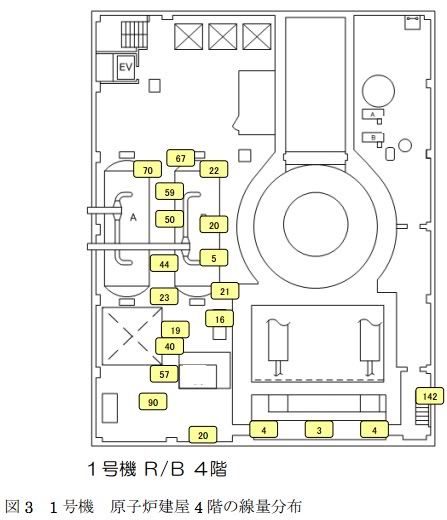
  • I found the radiation survey of Unit 1's 4th floor conducted during the October walk-down in this TEPCO report with the title "Unit 1-3 core about the state of Fukushima Daiichi Nuclear Power Station (Nov. 30, 2011)". The dose rates are expressed in [mSv/h] in the resulting survey map below. The twin boilers on the left are the isolation condenser heat exchangers inspected in the video. The left boiler (A) belongs to subsystem-A which was utilized in the hours after the quake. The right boiler (B) of subsystem-B was left idle. The video begins with the men inspecting the southside (bottom) of the isolation condenser (02/15/2012).
  • In this TEPCO handout with the title "Evaluation of operating conditions of Isolation Condenser, Unit1, Fukushima Daiichi Nuclear Power Station" dated Nov. 22, 2011, the company reconstructs the use of the isolation condenser on the day of the earthquake and tsunami in greatest detail to date. According to TEPCO, both subsystems of the isolation condenser were engaged after its automatic actuation following the reactor scram until the operator shut the isolation condenser down. Therefore, subsystem B was in use approximately from 14:52 to 15:03 on March 11 (05/11/2012).
  • On page 24 of TEPCO's press handout with the title "Fukushima Nuclear Accident Investigation Report (Interim Report – Supplementary Volume)" dated Dec. 2, 2011, the company states:
    “ At around 15:03, reactor pressure dropped quickly in conjunction with IC started up, and the IC’s return line’s isolation valves (MO-3A, 3B) were temporarily “fully closed” after it was determined that the pressure vessel temperature drop rate of 55 degree C/h as stipulated in the operating procedures could not be adhered to. Other valves were left open and on standby. After this it was determined that one IC system was sufficient for controlling reactor pressure at around 6 to 7MPa and the subsystem-A was assigned with this task. The reactor pressure was then control by opening and closing the return line’s isolation valve (MO-3A).
     Although the above shutdown procedural actions have been pointed out by some as an operation error, the operators conducted the operations as stipulated in the operating procedures.”
    However, on page 16 of their study of potential consequences of a hypothetical station blackout at Browns Ferry Nuclear Power Station in Alabama with the title "Station Blackout at Browns Ferry Unit One - Accident Sequence Analysis", Cook and others (1981) suggest that “a depressurization at the Technical Specifications limit of 55.6°C/h (100°F/h) will produce a gradual reduction of the drywell ambient temperature; a rapid depressurization will produce a faster drywell temperature reduction, but is probably not necessary. Certainly, if the operator perceives developing difficulties with the in-drywell equipment such as the relief valve solenoids, he should convert an ongoing 55.6°C/h (100°F/h) depressurization into a more rapid one.”
    The operator's guide used at Fukushima should have included this provision (05/17/2012)!
  • If the isolation condenser of Fukushima Daiichi Nuclear Power Station Unit 1 was designed like that at Oyster Creek Generating Station in the US, a filling of shell water in one train of the condenser would have lasted 45 minutes of operation without makeup water (Grant and others, 1997). Depending on the particular design of the reactor, condensate water from a tank, demineralized water or fire water could have been used for makeup. In US reactors, a condensate water tank filling alone could have extended condenser operation up to 6 hours. Because TEPCO re-activated only one isolation condenser train and makeup water may have been unavailable as a consequence of the station blackout, the shell water in the active condenser train could have completely boiled off at 16:30 on Friday, Mar. 11 (09/02/2013).
Related Posts

Friday, March 18, 2011

Ionizing Radiation & The Mind


On this day last week, northeastern Japan was hit by a magnitude 9.0 earthquake, the strongest recorded in history, triggering a tsunami with waves topping 30 feet in some locations. The impact of this catastrophe of epic proportions now known as Tōhoku Earthquake and Tsunami has been devastating. According to Fiona Ortiz's report with the title "Aid groups say most of Japan displaced have basics" published online on Reuters today, the death toll stands at 6,539, more than 10,000 are still missing. Entire coastal villages have disappeared. Hundreds of thousands have been displaced. Their basic needs have just been met.

On top of the wide-spread suffering, the disaster rendered the cooling systems of the nuclear power plant with six reactor blocs near the town of Fukushima 150 miles north of Tokyo dysfunctional (see Reuters summary entitled "Snapshot: Japan's nuclear crisis"). Uncovered by water, fuel rods in three reactor units and the spent fuel storage pool of a fourth have been heating up. Radiolysis of water and the oxidation of the bared rods' zirconium cladding has been producing hydrogen. Once a threshold concentration was reached, the hydrogen reacted with oxygen, triggering massive explosions that destroyed the reactor buildings. Reactor containments may have been compromised. Considerable amounts of ionizing radiation are being continuously released, exposing the direct surroundings of the reactors to highly dangerous levels.


Bird's eye view of reactors 4 and 3, published Apr. 14, 2011.

At this time, plant operators, first responders, and the Japanese military are still struggling to control the situation. The risk of radiation exposure at levels detrimental to health is considered minuscule outside the plant. Fallout reaching other countries in worrisome proportions has been ruled out, particularly in the continental U.S., which are 5000 miles removed from the plant in Japan. President Obama assured U.S. citizens that no radiation-related harm is expected to affect the nation (see Jeff Mason and Patricia Zengerle's report with the title "Obama requests nuclear review, sees risk in Japan" published online on Reuters yesterday).

However, prevailing winds have already driven air from the site to the West Coast. Iodine tablets have been sold out. People are worried, particularly because governments and agencies of various nations judge the threat in differing ways. Whereas U.S. expatriates in Japan are advised by their government to stay out of a 50-mile radius around the plant, the Japanese government believes that there is no  public health risk at roughly half that distance (see Shinichi Saoshiro and Chisa Fujioka's report with the title "WRAPUP 3-Japan scrambles to avert nuclear disaster, global fears mount" published online Mar. 16, 2011). The governments of the highly industrialized, energy-hungry nations commonly support nuclear power. Most experts tend to avoid alarming the public unnecessarily. Concerned citizens perceive great dangers. Opposing views result in diverse and opposing messages.

I worked in hot zones in the 1970s. Ionizing radiation seems sinister to us, because we cannot sense it and its deleterious effects cannot immediately be noticed, unless the levels are extremely high. Then, victims have reported that they could feel the radiation.

Chemical elements may vary in the composition of their nuclei. Whereas the number of protons remains the same for each element, defining the chemical properties and its name, the number of neutrons, and with that the atomic weight, may vary. The isotopes, as these variations are called, are distinguished by the sums of protons and neutrons called atomic mass numbers. For example, the isotopes of hydrogen, are labeled 1H (hydrogen: 1 proton) 2H (deuterium: 1 proton plus 1 neutron) and 3H (tritium: 1 proton plus 2 neutrons). Hydrogen is most prevalent, but the small amounts of deuterium and tritium naturally present are responsible for the fact that the chemical element hydrogen's atomic weight is listed in the periodic table of elements as slightly greater than 1.

Some isotopes, like tritium in the example above, are unstable. That is, their atomic nuclei decay at particular rates, transforming them into other elements. The rates are measured in half-lives, that is the discrete period of time in which half of the nuclei decay. The decaying nuclei emit ionizing radiation. Radioactivity represents the number of decays in a set window of time, e.g. one second, and is expressed in Becquerel [Bq] or Curie [Ci].
-->
Bidirectional Becquerel-Curie Converter
x 10 Bq = x 10 Ci
Insert your values in the appropriate boxes and push the button with the label of units you wish to convert to [femto - 10-15; pico - 10-12; nano - 10-9; micro - 10-6; milli - 10-3; kilo - 103; mega - 106; giga - 109; tera - 1012].

Ionizing radiation emitted during radioactive decay is mainly composed of three types which may occur in mixture:
  • α - large positively-charged particles composed of two protons and two neutrons (helium cations),
  • β - small negatively-charged particles (electrons), and
  • γ - high-energy electromagnetic rays.
The first type interacts with matter most dramatically, but is the least penetrating because the large α-particles come quickly to a halt owing to the multitude of interactions with the absorbing matter. β-particles travel further. Depending on their energy, they may travel meters in air, but are absorbed within millimeters in water or tissue. By contrast, γ-radiation interacts the least, but penetrates the deepest. Therefore, we suffer from the adverse effects of α- and β-radiation, only when we are in close proximity to the source or incorporate the source. Thin plastic foil may suffice to protect us. By contrast, lead bricks and distance may be necessary to shield us effectively from γ-radiation.The levels fall with the squared distance from the source following Newton's inverse square law. Ionactive Consulting provides an insightful demonstration of this law. Because γ-radiation dissipates in a sphere, the dose D at distance r can simply be calculated using:

D = dose at source / 4πr2

Electromagnetic rays of lower energy than that of γ-radiation, similar to X-rays, are also considered ionizing radiation and may be emitted during the decay of radioactive isotopes, but their effects do not seem to account for much. By contrast, fluxes of nuclear particles like neutrons and protons are highly ionizing.

The radioactive isotopes unleashed from the Japanese reactors emit α-, β- and γ-radiation. In addition, some neutrons have been detected near the plant and have been associated with fissible material from fuel rods scattered by the hydrogen explosions. The health hazard mounts with the duration of exposure, that is the doses of radiation absorbed by the whole body over time.

Two types of measurement are commonly used to express these doses. The radiation absorbed dose (expressed in Roentgen absorbed dose [rad] or Gray [Gy]) measures the amount of ionizing radiation absorbed regardless of its biological effect, while Roentgen equivalent man (expressed in rem or Sievert [Sv]) takes the biological impact of the type of radiation into account.

Ionizing radiation forms free radicals in the cells, particularly highly reactive species of oxygen, that can modify vital molecules. Theoretically, any particle of ionizing radiation, we may consider γ-rays particles, can damage DNA. The cells may not be able to repair the damage, leading to cancer. Therefore, a health risk-free level of radiation is impossible to determine, and the average naturally occurring radiation dose we are exposed to in every-day life is considered baseline. Multiples of this value are deemed permissible when unavoidable, e.g. in medical procedures or in professional settings like hot zones and nuclear facilities.

When I worked in this field, 0.125 rem per year were considered normal exposure. Workers in nuclear facilities were permitted 5 rem per year. Acute radiation syndrome, a potentially life-threatening illness, develops at 150 rem. Among other effects, the white blood cells drop to critically low levels, compromising the immune system. Half of the people exposed to 300 rem do not survive. Doses greater than 500 rem are instantly lethal.

1 Sv equals 100 rem.
Bidirectional Sievert-Rem Converter
x 10 Sv = x 10 Rem
Insert your values in the appropriate boxes and push the button with the label of units you wish to convert to [femto - 10-15; pico - 10-12; nano - 10-9; micro - 10-6; milli - 10-3; kilo - 103; mega - 106; giga - 109; tera - 1012].

In the current situation we find in Japan, such doses are only reached within the confines of the nuclear power plant. At the peak doses measured at the plant's gate during the past week, we would have been mildly sick in four hours. By contrast, levels recorded in the surrounding countryside away from the plant have been more than a thousand times lower. Therefore, the people at greatest risk at present are the personnel working inside the plant and the pilots flying helicopters low over the broken reactor buildings for water drops.

Here in the U.S., the situation is entirely different. By the time clouds from Japan reach the West Coast, α-emitting isotopes, like the highly toxic plutonium isotopes, have precipitated because of their sheer weight. Much of the radiation has been washed out by rain and scattered. Perhaps two γ-radiation emitting isotopes may drift our way that may potentially pose a health risk, known to cause cancer of the thyroid and the liver at high doses: 131I and 137Cs. However, they will arrive highly diluted, if at all. Contamination with significant amounts through direct ingestion or inhalation can be excluded.

Concentration in the food chain is the only imaginable path on which we might be exposed to trace amounts of these isotopes. For prudence's sake, we may wish to monitor radiation levels in fresh seafood, wild mushrooms and berries, venison, farm produce, as well as fresh dairy products and meats, more carefully during the coming months.

Addenda
  • According to William Broad's report with the title "Radiation Plume Reaches U.S., but Is Said to Pose No Risk" published online in The New York Times, plumes containing the two isotopes mentioned above have been detected over Sacramento, CA, yesterday. For the scientifically inclined, a suitable radiation detector like the RADIATION DETECTOR DOSIMETER TERRA-P FOR HOUSEHOLD USE !!!ENGLISH VERSION!!! can be acquired for a couple of hundred dollars. Unfortunately, this model was sold out on Amazon in one day. Fancier ones with digital data output cost twice as much; buyers must wait six weeks. Professional equipment like the Ludlum Geiger Counter Model-3_with-44-38 costs even more. The technically versed may wish to build a simple one themselves. Instructions can be found in Wenzel's post entitled "Cheap Sensitive Radiation Detector" published online on radiolocman.com Apr. 23, 2008. Care most be taken that the instrument remains properly calibrated over the duration of the study. Ideally, sample tests should be carried out in exact same location and geometry. Furthermore, we ought to ensure that we collect good background readings, before we check our samples. We must keep in mind that Geiger-Müller detectors are very sensitive for β- and γ-radiation, picking up the most minute amounts. Depending on amplification, the meter may rage in response to little (03/19/11).
  • As a rule of thumb in nuclear medicine, we considered a radioactive isotope decayed after ten half-lives. That is, at that time the radioactivity had diminished to one-thousandth of the initial amount. Applied to the present situation, a radiation exposure of milliSievert will have diminished to microSieverts within ten half-lives, and microSievert to nanoSievert. On the West Coast, we are looking at nano- and pico-levels to begin with. Iodine-131's half-live is 8 days. In three months, according to the above rule of thumb, the exposure from this isotope at the currently reported rates outside the plant will be entirely negligible, unless the source is replenished. Cesium-137 with a 30-year half-life poses a greater concern (03/19/11).
  • Targetmap.com provides regularly updated maps of radiation levels recorded in various prefectures of Japan. The levels are given in nGy/h. The conversion factor to Sievert can be assumed to be 1 because of the distance to the source which limits the effect to γ-radiation. More detailed information on conversion factors can be found on this page maintained by the Hiroshima International Council for Health Care of the Radiation-impaired. Interestingly, readings seem unavailable for Fukushima, where the plant is located. The prefecture is constantly considered “under survey”. However, Ibaraki Prefecture bordering south provides insight (03/20/11):
  • When the industrialized nations began to build civilian nuclear power plants for electricity generation four decades ago, the premise was a closed fuel cycle. That is, spent fuel was supposed to be reprocessed. Fissionable material was supposed to be extracted and used in fast breeder reactors. The breeders would produce fuel that could be reused in regular reactors. The most toxic and unusable remnants were to be embedded in molten glass and deposited in tectonically stable salt mines miles underground. This promise has not come to fruition to the day.
    Safe reprocessing became way more involved as initially believed. Fast breeder technology is wrought with technical challenges and was never developed to reach safe and stable operational levels on industrial scale. Sites for end storage proved difficult to find.
    The unclosed fuel cycle is the reason why so many spent-fuel rods have been piling up at the damaged plant in Japan as well as at other facilities around the globe. As the current crisis strikingly demonstrates, storage pools filled up to capacity with spent fuel appear to pose an equal, if not greater, risk as the reactors themselves.
    For nuclear power to remain a reasonable source of energy, safer reactor designs will not suffice. The fuel cycle must be safely and efficiently closed. How to achieve this not only technologically, but also in a socially and politically accepted manner, will eventually decide the future of nuclear power (03/22/11).
  • Since worries about radiation levels in drinking water are rising in Japan, recent high-end refrigerators use carbon block filters like UltraClarity for water filtration. This type is used in the nuclear industry and may remove iodine and cesium quite effectively. Perhaps it is best to change the filter every three months under the current circumstances instead of the recommended six. More effective are reverse osmosis filtration systems like the Watts Premier RO-Pure 4-Stage Reverse Osmosis System. Biomedical research laboratories are commonly equipped with separate systems that provide highly purified, deionized water
    (03/22/11).
  • Reuters maintained the most exhaustive ScribbleLive forum for current developments on the recovery from the quake and tsunami and, particularly, efforts at the crippled nuclear power plant with countless links to information of interest. Since its closure today, the lively discussion of cutting edge data at least two days ahead of the news has relocated to a new ScribbleLive forum independent from Reuters (03/25/11).
  • The expert presentation in the video below provides the clearest explanation of the events leading up to the nuclear accidents at the Fukushima power plant. The earthquake disrupted cooling water pipes feeding reactor vessels and a loss of coolant ensued. Loss of coolant accidents, or LOCAs for short, are unprecedented in the history of nuclear power generation and their possibility should pose great concern at reactors of similar design. Releases of radiation from the plant are not yet contained (03/29/11):
  • Evidence that fallout from the Japanese reactor accident has reached the SF bay area can be found in KFC's post with the title "Fukushima Fallout Reaches San Francisco" published today on the MIT technology review. The spectra warrant particularly close inspection (04/01/11).
  • Juergen Baetz reports in his post with the title "Germany's radioactive boars a legacy of Chernobyl" published online for AP on Apr. 1, 2011, that wild boars with concentrations of Cesium-137 greater than the recommended limit, that is more than 600 Bq/kg, can still be found in German forests 25 years after the reactor accident at Chernobyl in the Ukraine about 1,000 miles away. Mushroom lovers may find helpful advice on the species known to incorporate cesium-137 and other radioisotopes on HealWithFood.org. Below is the most recent google map of contamination in the surroundings of the Fukushima power plant Greenpeace established (04/11/&06/02/2011):
  • NHKWorld reports in a brief news clip with the title "Govt suspends shipment of Fukushima sand lances" published online today that “the [Japanese] government has instructed Fukushima Prefecture to suspend shipments of a small fish caught off its coasts found to have radioactive contamination, and to warn people not to eat them. The restrictions announced on Wednesday are being applied to marine products for the first time, amid ongoing troubles at the Fukushima Daiichi nuclear power plant. The instruction follows a health ministry report that the fish called sand lance caught on Monday near Iwaki city, south of the plant, was found to contain 14,400 Bq/kg of radioactive cesium. That's 29 times the safe limit. Ministry testing also found 3,900 Bq/kg, or twice the limit, of radioactive iodine in the fish. Excessive amounts of radioactive cesium were detected in sand lances caught in the same area on April the 7th and 13th. The government says the fish are not on the market, as fishery cooperatives in Fukushima are not operating” (04/20/11).
  • Live webcam view of the Fukushima nuclear power complex from inland (West) towards the sea (East). The superstructures of reactors #1 and #2 are visible on the left. Damage can be seen to the top floors of reactor #1. The remnants of reactors #3 and #4 are located on the right (05/07/11):
  • The U.S. Environmental Protection Agency regularly examines the regional concentrations of a number of radioisotopes including iodine-131 and cesium-137 in the air, rain and drinking water as well as milk. The agency provides a list of the latest results for your area in a table published by Socrata.com which can be best viewed best in full screen below (05/10/11):

Powered by Socrata
  • Last weekend's revelations by the Fukushima power plant operator TEPCO (press release of reactor #1 parameters immediately after the quake with the title "Reactor Core Status of Fukushima Daiichi Nuclear Power Station Unit 1" dated May 15, 2011) provide ample evidence that the incident was rather the result of aging reactors than the consequence of an unforeseeable event. We are left to live with the fallout, the full extent of which is not yet known and will affect us for years to come (05/16/11).
  • Yasaikensa provides comprehensive insight into the contamination level of foods in Japan (06/03/11).
  • According to Jbhealer's post with the title "Holistic Radioprotection: Fruit Pectin, A Gentle & Powerful Chelator", dated Jun. 22, 2011, pectins constitute formidable chelators for the detoxification of radionuclides like cesium-137 (07/09/11).
  • In his article with the title "Marginalization After the Fukushima Nuclear Meltdown" published online in the July issue of  The Asia-Pacific Journal, Robert Jacobs provides informative insights into the social impact of the Fukushima reactor accident on future life in Japan (07/12/2011).
  • Discoveries of cesium-137 contaminated beef sold for consumption in Japan have been increasing rapidly over the past week. This week, the Japanese government decided to suspend the sale of beef cattle from Miyagi Prefecture, in addition to the week-old ban of beef from Fukushima Prefecture, as Kyodo News reports today in their post with the title "Gov't bans all shipments of beef cattle from Miyagi Pref." Miyagi Prefecture ships roughly 30,000 heads of cattle a year. The cattle was fed contaminated straw harvested around the crippled Fukushima Daiichi nuclear power station. The Japanese government set the legal limit for cesium-137 in beef at 500 Bq/kg. Minoru Matsutani of The Japan Times noted in his online Q&A column on Jul. 22, 2011, that “the most highly contaminated beef found contained radioactive cesium of 4,350 becquerels per kilogram, according to the Health, Labor and Welfare Ministry.” The meat was confiscated. Reuters reports on the fallout:
  • I can only recommend "Ionizing radiation and life" by Victor Arena (Mosby, St Louis, 1971). Though a seemingly old text book, the contents remain pertinent today. The author concludes in his epilogue: “We also hope that radiobiologic knowledge will be a strong deterrent for man against unwise use of nuclear energy and against the temptation of deploying nuclear weapons for the "solution" of international conflicts. With the experience of Hiroshima and Nagasaki, we like to believe than man will have enough wisdom in the future to avoid the destruction of his own species in a nuclear holocaust.”
    According to pp. 239 of this book, measurements of chronic exposure doses across the 1960s US suggest 1.35 milliSv/y as a rough average for an effective absorbed dose from external natural sources. We must add about 0.8 milliSv/y from internal exposure. Individual doses may vary considerably with location (12/12/2011).

-->
Radiation dose meter at Fukushima Medical University 35 miles from the stricken nuclear power station. The readings are continuously updated. In the week after the quake, dosemeter readings in Fukushima City spiked above 20 microSv/h. At this dose, we are exposed to an effective absorbed dose of 175 milliSv in a year which corresponds to 17.5 rem; a dose that nuclear industry professionals perhaps accumulate over their entire career (03/09/2012).
  • According to Sarah Sheffer's video report with the title "Scientist fears radiation still leaking at Fukushima nuclear plant" published online on Reuters Nov. 19, 2012, Japan's contamination problems continue to mount one year and a half after the accident:

Related Posts

Saturday, September 6, 2008

Kurosawa's Teachings on Leadership & Academe

Today we commemorate the achievements of the great Japanese film director Akira Kurosawa on the tenth anniversary of his passing. Kurosawa made countless contributions to the understanding of human behavior. He provided us with one of the most impressive descriptions of the changing relationship between humans and nature with his narrative on the life of the hunter Dersu Uzalain the vastness of Siberia around the turn of the last century. In Rashomon,he tells us about the treacherous mission of a judge attempting to establish the truth in a criminal case. The search ends in the admission that objective actuality cannot be established from subjective experience, arguing profoundly for the use of the scientific method in our lives. Kurosawa's most striking contributions touch on human leadership. In one of his short films collected in Dreams,a retired officer recounts his life-long nightmare of having sent his soldiers on a mission, from which none returned. The film paints in graphic, indelible strokes the pains of war and the horrid memories that torment the man decades after the experience. It argues strongly that for their own sanity officers must go first, leading their troops into action. In Seven Samurai,Kurosawa portrays the ambiguous relationship between citizenry and military. In times of war, we love our military. In times of peace, we feel no need for it. Leadership and power pervade Kurosawa's brilliant adaptations of Shakespear's plays, transposing them into the Japan of the Shoguns and Samurai (Ran).

The master tells about the challenges of leadership most strikingly in Kagemusha.A great warlord is mortally wounded in a siege. In order to ensure the success of the campaign, his advisers decide to search for a substitute. They find the ideal candidate in the person of a beggar sentenced to die for a small crime. In exchange for his life, the man pledges to play the lord's role until the campaign is over. He resembles the deceased noble so much that even the wives and concubines mistake him. The advisers teach him the manners of life at court. The man learns his lessons and gradually adopts his new role as the lord. However, at all times he is plagued by the anxiety about wrongfully assuming the role of some one above his station. Moreover, his fear lingers that the nobles will kill him, once they do not need him anymore. But he plays his role well, so well in fact that he assumes true leadership in the most decisive moment on the battlefield.

After his formidable performance, the exhilarated advisers ask him to stay on. He declines. His ingrained sense of status forbids it. He feels that lordship is not a beggar's station. Plus, he was just a stand in, a deception. With regret, the nobles set him free. They toss him out on a country road where he resumes his old life of an impoverished vagrant. But his innocence is lost. He remains eternally tormented, witnessing that without his leadership the kingdom succombs to the onslaught of its adversaries.

This great tale offers many lessons for modern leadership. For example, academe today is still governed with a strong sense hierarchy. Young talent is hired on the promise of success and tenured once the promise is fulfilled. In U.S. research universities, the success is pegged to the amount of research dollars garnered from Federal agencies. These agencies add about 50 % indirect cost for overhead expenditures on every dollar they pay out in direct costs for the research. Only a bit more than a tenth of the research proposals is funded. However, assuming a rate of 50 % overhead American universities recover roughly $8 billion in indirect cost from grants awarded by the National Institutes of Health alone in fiscal year 2008. Without this sizable allotment, many institutions could not sustain themselves. Therefore, the pressure on the faculty to obtain federal funding is exorbitant. Established funding histories become necessary prerequisites for tenure and further promotion. This struggle consumes many a talented scientist, turning beggars into warlords they should not be, in analogy to Kurosawa's tale.

Often the energy is spent, once tenure is obtained. Creativity is drained. Productivity ceases. Soon funding evaporates. It becomes harder and harder to make a scientific contribution or even to keep up appearances. At that stage, universities have not developed adequate and effective mechanisms to realign faculty salary with performance. Offers for early retirement may leave a decade of limbo which neither the concerned faculty nor the university knows how to fill meaningfully. Administrative promotion may not provide a solution. Too easily, the Peter Principle applies. That is, faculty members are promoted to functions with ever greater expectations and fail. Since the academic promotion system is unidirectional, a sizable fraction of the hard-won Federal funding is bound to be spent on high salaries with little to show for. Frustration mounts among the involved parties, and the mind that is supposed to be preoccupied with finding the solutions for tomorrow's problems is increasingly consumed with the struggle for meaning and place in a combative environment. At this juncture, it is wholesome to reflect on one's original goals in life and on a timely strategy to negotiate a dignified and respectful path back to these goals.

In Kurosawa's tale, the beggars' decision to return to his former life was of defining importance not only for his own fate, but also for the fate of his country. The audience is left with the sense that he should have stayed on the job. His belief in predestination and his truthfulness prevented him from doing so. In our society unbound by destined fate, thorough reflection and careful planning should help us to develop and offer favorable individualized solutions, facilitating the proper choice at the opportune moment.

Addendum

  • Today, National Public Radio's All Things Considered reported in a segment by Iris Mann entitled "A Kurosawa Celebration, From Many Angles" about Akira Kurosawa's achievements on the occasion of the restoration of Rashomon (11/10/08).